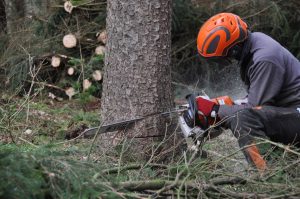
 Romania has nearly seven million hectares of forest, some of which are among the oldest in Europe. But this heritage, which is essential to the continent’s biodiversity and protected in part by the Natura 2000 network, is now seriously threatened. Illegal logging, which is even more widespread than authorized logging according to data released in 2024, primarily affects primary forests and fuels a lucrative trade driven by corruption and well-established criminal networks. Faced with this endemic phenomenon, the Romanian authorities and the European Union are attempting to strengthen control and transparency mechanisms, but have so far failed to bring the crisis to a lasting end.
An exceptional forest heritage threatened by illegal logging
With nearly 6.9 million hectares of forest, covering approximately 29% of its territory, Romania is home to some of the continent’s most valuable ecosystems. Some of these areas are part of the Natura 2000 Network, which protects primary forests unique to Europe. These forests play an essential role in regulating the climate, soil quality, biodiversity, and drinking water supply.
However, this heritage is seriously threatened by illegal logging, which has reached unprecedented levels in recent years. According to a government forest inventory published in 2024, approximately 20 million cubic metres of timber are cut illegally each year, which is more than the volume harvested legally. This situation reflects both the profitability of trafficking and the weakness of control mechanisms.
The consequences are manifold. Economically speaking, the forestery sector accounts for around 3.5% of Romania’s GDP, but the scale of illegal logging deprives the state of considerable revenue and disrupts businesses that comply with the rules. Ecologically, the remaining 525,000 hectares of primary forest are among the first victims, particularly in the Carpathians. The disappearance of natural habitats leads to soil erosion, deterioration in water quality, increased risk of landslides, and the loss of iconic species such as the brown bear and the lynx.
The social impacts are no less worrying. In many rural areas, people still depend on forest resources for their livelihoods. Their decline is contributing to the exodus to urban centres. Furthermore, violence against environmental activists highlights the seriousness of the problem: according to Euronews, 185 people were threatened and six were murdered between 2014 and 2020.
The drivers of an endemic phenomenon
Illegal logging thrives in Romania because it is rooted in deeply entrenched factors. Administrative corruption is one of the most significant. As shown by the investigation published by Politis, some public officials ignore unauthorised logging, falsify documents, or obstruct investigations in exchange for bribes, creating a climate of impunity. In this permissive environment, organised crime networks operate effectively, laundering illegal timber, intimidating witnesses, and infiltrating transport networks.
Domestic demand is also contributing to the growth of this phenomenon. Nearly 3 million households still heat their homes with wood, representing approximately 18 million m³ of annual consumption. This constant pressure encourages a parallel market where cheaper, illegal wood circulates freely.
Companies are not always strangers to this system. Some — Romanian or foreign — buy wood at low prices, pretending to be unaware of its dubious origin, taking advantage of a market that lacks transparency. This porosity makes controls more difficult and encourages the continuation of trafficking.
Finally, forest governance suffers from structural flaws. Poorly enforced regulations, insufficient staffing, and poor coordination between institutions limit the state’s ability to monitor logging effectively. A study by Niţă highlights the lack of transparency in the allocation of permits, weak accountability mechanisms, and the absence of public participation. These shortcomings, combined with the complexity of administrative procedures, leave illegal operators considerable room for manoeuvre.
National and European responses still insufficient
Faced with rising levels of illegal logging, the Romanian authorities have adopted several measures to improve transparency and control in the forestry sector. One of the most significant is the introduction, in 2016, of the SUMAL 2.0 digital tracking system, which makes it possible to track every load of timber from felling to sale. Combined with remote sensing tools and geographic information systems, this system aims to limit falsification and document timber movements in real time. The government has also tightened criminal penalties to deter illegal operators.
The European Union has stepped up these efforts by adopting a regulation in 2022 prohibiting the import of products derived from illegal deforestation. This measure should have a significant impact on Romanian industries, encouraging companies to ensure the traceability of their supplies and to make more systematic use of certifications such as the FSC label. The EU also supports Romania with financial and technical assistance to improve forest governance and the monitoring capacity of national institutions.
Civil society also plays a vital role in combating this scourge. NGOs such as Greenpeace document illegal logging, publish investigations, provide legal support to local communities, and help keep the issue in the public eye. These actions are part of an essential vigilance effort at a time when violence against environmental defenders remains a cause for concern.
In the field of research and public policy formulation, several recent studies highlight areas for improvement. A study by Braga et al. (1), for example, assesses the potential contribution of better-managed forest products to combating greenhouse gas emissions. Other analyses emphasize the need to strengthen institutional coordination, increase transparency in the allocation of exploitation rights, and involve local communities more closely in decisions relating to forest management.
These advances reflect growing awareness, but they are still struggling to curb the phenomenon’s scale. The success of the reforms will depend on their effective implementation, the fight against corruption, and the ability of Romanian institutions to impose strict rules in a sector where economic interests remain powerful.
A battle still far from being won
Romania is currently facing one of the most serious environmental challenges in the European Union: preserving its exceptional forest heritage while combating a well-established illegal system. Despite efforts in recent years — tighter controls, digital traceability, European support, and growing NGO mobilisation — illegal logging continues to thrive, fuelled by corruption, criminal networks, and flaws in forest governance.
National and European initiatives mark a necessary step forward, but remain insufficient given the scale of the problem. The sustainable protection of Romania’s forests requires not only robust legal instruments but also strong political will, rigorous enforcement of penalties, and greater involvement of local communities. Ensuring transparency, strengthening controls, and relentlessly combating impunity will be essential conditions for protecting one of Europe’s last significant forest areas and preserving the ecosystems that depend on it.
Thumbnail: Illegal logging in the Carpathians (Pixabay)
Note:
(1) C. I. Braga & alii, “Assessing the greenhouse gas mitigation potential of harvested wood products in Romania and their contribution to achieving climate neutrality,” Sustainability, 17(2), 640, 15 January 2025.
* Hélène Debuisschert is a master’s student in Sustainable Management and Social Impact at ESSCA Paris.
Link to the French version of the article
To cite this article: Hélène DEBUISSCHERT (2025), “Romania: illegal logging, a scourge in the heart of Europe,” Regard sur l’Est, December 1st.