 Poland remains one of the EU countries most dependent on coal. Around 70% of its electricity is still generated from fossil fuels, mainly coal. This heavy reliance creates major challenges for decarbonising the economy and aligning the country with European climate objectives. The EU has, meanwhile, tightened its emission-reduction targets, notably through the European Green Deal and the Fit for 55 package. In this context, Poland is facing growing pressure to reduce its carbon footprint and contribute to the ambitious climate goals set at the European level.
Warsaw is therefore banking on a large-scale nuclear development plan, presented as a response to both climate commitments and energy security concerns. This choice nevertheless raises a number of challenges, including investment costs, commissioning delays, technological dependence, radioactive waste management, and public acceptance.
Although nuclear energy does raise concerns among the public(1), renewable alternatives such as wind and solar power, perceived as safer, more sustainable, and more cost-effective in the long term, are once again at the center of the debate.
Is Nuclear Energy Green?
The European taxonomy for sustainable finance, designed to channel investment towards environmentally responsible activities, classifies nuclear energy as a “transitional” energy source. It thereby recognises its potential to reduce carbon emissions in the short term as Europe gradually shifts towards renewable energy. However, its inclusion has sparked strong opposition from some Member States and environmental organisations, which point to the significant safety risks associated with nuclear power.
The diverging positions of EU Member States are creating tensions within the European energy policy framework. France, for instance, defends nuclear power as an essential low-carbon tool for moving towards a sustainable energy future, while Germany has expressed deep concern over nuclear risks and is determined to rely exclusively on renewable energy. These opposing views directly shape EU decisions on energy policy and the allocation of funding, making consensus more difficult to achieve. They also slow efforts to bring Member States together around a common energy transition strategy and complicate the implementation of a coordinated plan at European level.
Poland’s Renewable Energy Potential
Poland has considerable potential for renewable energy production, particularly in offshore wind and solar power. Thanks to its access to the Baltic Sea, the country benefits from particularly favourable conditions for expanding offshore wind farms, with capacity expected to reach 5.9 GW by 2030. This energy source already plays a key role in Poland’s energy transition strategy due to its high-capacity factor and ability to generate electricity consistently. Moreover, economies of scale and technological progress are making offshore wind increasingly competitive compared with other energy sources.
Solar power also offers significant potential, especially in southern Poland, where sunlight conditions are more favourable. The cost of this technology has fallen sharply in recent years, making it more accessible and competitive. The cost of electricity generated by photovoltaic panels has dropped by 89% over the past decade, making solar one of the most cost-effective energy sources, not only in Poland but worldwide.
Green hydrogen, produced from renewable sources such as wind or solar power, is also a rapidly developing sector. Poland has already begun exploring this technology as a way to decarbonise specific sectors, including heavy industry and transport. Green hydrogen is also seen as a promising solution for energy storage, as it enables the storage of surplus energy and its release during periods of peak demand.
Nuclear Power versus Renewables?
A cost analysis clearly highlights the gap between nuclear energy and renewable sources. Although nuclear power is a low-carbon energy source, it is associated with very high upfront costs, particularly long construction times and significant financial risks. The cost of building a nuclear power plant can range from $6,000 to $9,000 per installed kilowatt (kW), and construction projects can take a decade or more to complete. These features make nuclear power a costly investment, especially when compared with the continuing decline in the cost of renewable energies.
The renewable sources mentioned above have, by contrast, seen their costs fall dramatically over the past decade. The cost of offshore wind, for example, has dropped by more than 60%, while solar photovoltaic energy is now one of the most affordable sources of electricity worldwide.
From an economic standpoint, renewables appear to be a far more attractive option for Poland, both in terms of production costs and deployment speed.
What Strategy for Poland?
Supporters of nuclear energy argue that it could help bridge the supply gap created by intermittent renewable sources. To address this issue, Poland would need to integrate these sources more effectively into the energy grid, which would require significant investment in infrastructure and energy storage systems. Others argue that investment in nuclear power risks diverting funding and resources away from cleaner solutions. As the cost of renewables continues to fall, some believe that resources should instead be channeled into their development and into solving the storage challenge.
In practice, if nuclear power plants are to play a significant and beneficial role in Poland’s energy future, they must not become an obstacle to the development of renewable energy infrastructure and storage capacity, particularly through green hydrogen batteries. An effective energy transition will require a diversified energy mix, allowing different sources to complement one another while reducing vulnerability to supply disruptions, price fluctuations, and other uncertainties.
A diversified energy mix would make Poland more flexible and resilient in this field. Such a strategy would also make it possible to meet the country’s immediate energy needs, pending the commissioning of future nuclear power plants, while ensuring long-term sustainability. It could also become a key driver of technological innovation. By aligning its policies with the European Union’s climate objectives, Poland could position itself as a major player in the green transition, while guaranteeing economic stability, energy security and environmental sustainability.
Notes:
(1) Sovacool, B. K., Schmid, P., Stirling, A., et al., “Differences in Public Perceptions of Nuclear Energy Across Countries and Time: A Systematic Review”, Nature Energy, 5(7), 2020, pp. 582- 591.
(2) Jacobson, M. Z., 100% Clean, Renewable Energy and Storage for Everything, Cambridge University Press, 2020.
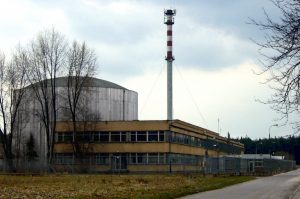
Thumbnail: “Maria” nuclear reactor in Otwock-Świerk, near Warsaw (Copyright: Bartosz Marcin Kojak - CC BY-SA 2.5).
* Julia Damasceno holds a master’s degree in Sustainable Management and Social Impact from ESSCA School of Management in Paris.